

Actioning Key Drivers: Cohort Learning Experience for Leaders
When the Employee Experience Survey results were released, the Division of Student Affairs encouraged and empowered managers and supervisors to develop action plans within their respective areas.
At the same time, divisional leadership and the human resources team saw an opportunity to take a broader, strategic approach across the more than 30 departments that make up Student Affairs.
In response, Student Affairs launched a targeted, cohort-based leadership development initiative designed to address key workplace drivers identified through the survey and translate employee feedback into meaningful action.
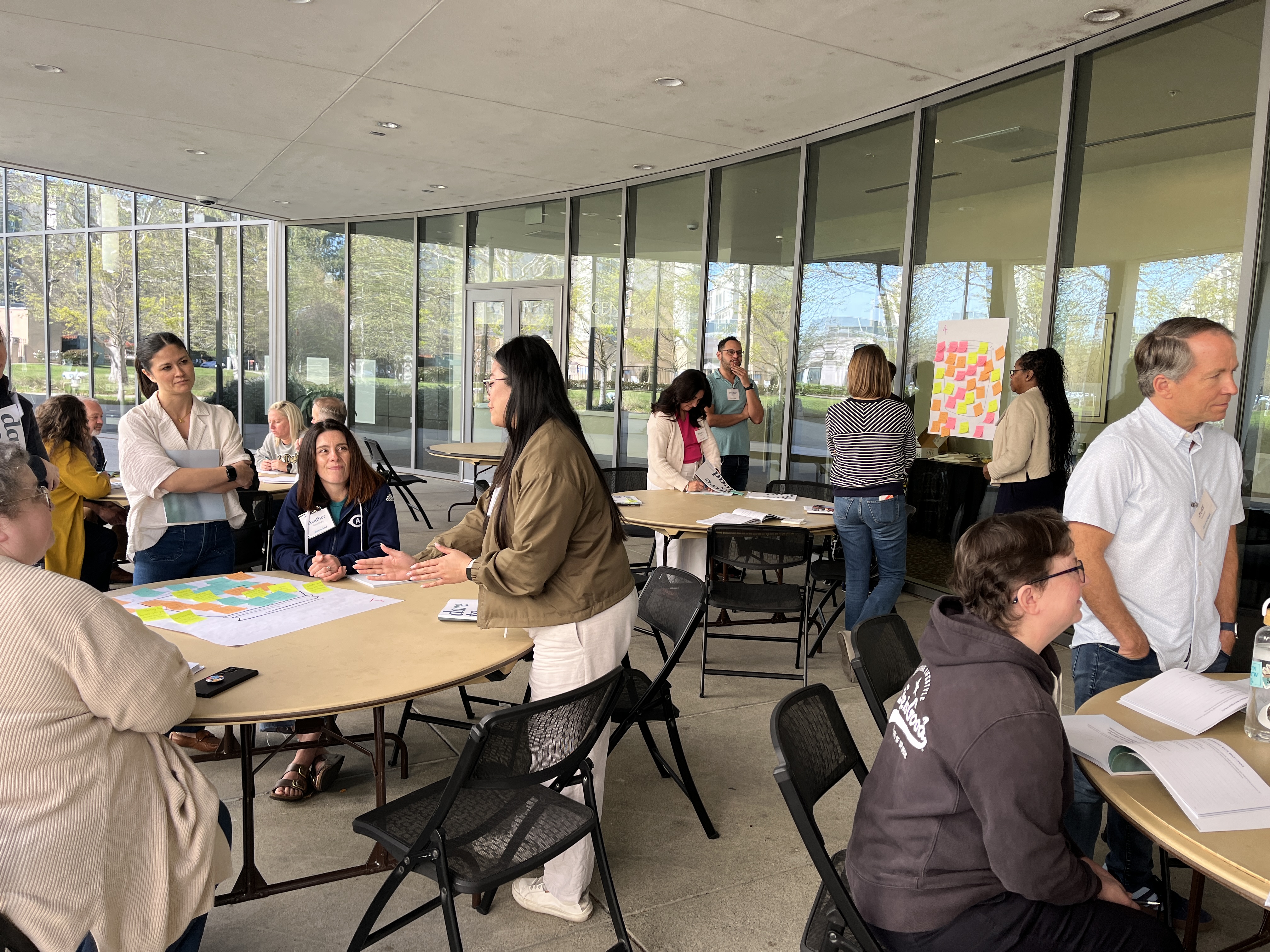
Designed to complement UC Davis’ campus-wide professional development programs, the initiative brings leaders together for an immersive three-day development experience. The goal is to create a supportive environment where participants can explore the more nuanced aspects of people management—from building trust and navigating difficult emotions to creating workplaces where employees feel comfortable bringing their authentic selves to work.
Driving Key Survey Priorities
The program was intentionally selected to support employee engagement themes highlighted through the survey, including:
- Bringing one’s authentic self to work
- Fostering an inclusive culture
- Building a culture of trust and respect
- Strengthening teamwork and collaboration
- Providing useful and meaningful feedback
- Building confidence in leadership
The Approach
The first step was understanding the data at the individual leadership level. The approximately 60-person leadership team was mapped according to their departmental key survey drivers.
From there, 25 leaders at the director level and above were invited to participate in a professional development experience based on Dr. Brené Brown’s Dare to Lead framework. The program provided participants with a structured opportunity to strengthen leadership skills while directly connecting their learning to the employee experience priorities identified in the survey.
The Power of the Cohort Model
The cohort model was an important part of the program’s design. Rather than approaching leadership development individually, participants progressed through the curriculum together, creating opportunities for shared problem-solving, cross-unit collaboration and continued accountability.
While the program focused on strengthening staff engagement, it also modeled leadership engagement. Participants connected with colleagues across Student Affairs, exchanged perspectives and strengthened relationships across units—helping build a more connected leadership network throughout the division.
Through this targeted approach, Student Affairs translated organizational values into action by enhancing existing leadership resources while working toward a more connected, supportive and trusted workplace culture.
Sustaining the Learning
Support continued after the initial three-day experience. Participants were offered group coaching and facilitated team support to help reinforce what they learned and apply the techniques within their individual teams and work environments.
The strong interest generated by the first cohort also led to additional cohorts of the program for managers and supervisors, expanding the opportunity for leadership development across Student Affairs.

Impact and Testimonials
Participant feedback demonstrated the program’s impact. One hundred percent of participants agreed or strongly agreed that the experience helped them make a connection between what they learned and behaviors they wanted to change. Participants also recognized the important role self-awareness plays in becoming a more effective and courageous leader.
Here’s what participants had to say:
“The training helped to give language to complicated dynamics we were seeing on our team. Now I feel like we have language to name the issue and, more importantly, tools to address it!”
“A deeply meaningful experience for me individually and as a leader. I have both self-reflection tools and resources to use with my department. A worthwhile investment.”
By connecting Employee Experience Survey feedback with intentional leadership development, Student Affairs created a practical pathway from listening to action—equipping leaders with tools to strengthen their teams while helping build a workplace where employees feel supported, respected and empowered to contribute.